
Your kitchen isn’t just a place to cook. It’s the heart of your home—the hub where family gathers, meals are created, and memories are made. But here’s the truth: even the most stylish kitchen can feel cold, chaotic, or stressful if the lighting is wrong.
Lighting isn’t just about visibility. It shapes your mood, influences how food looks, and even affects how much time you want to spend in the space.
To make your kitchen functional and inviting, you need a balance of three essential types of lighting.
1. Ambient Lighting – The Foundation of Comfort
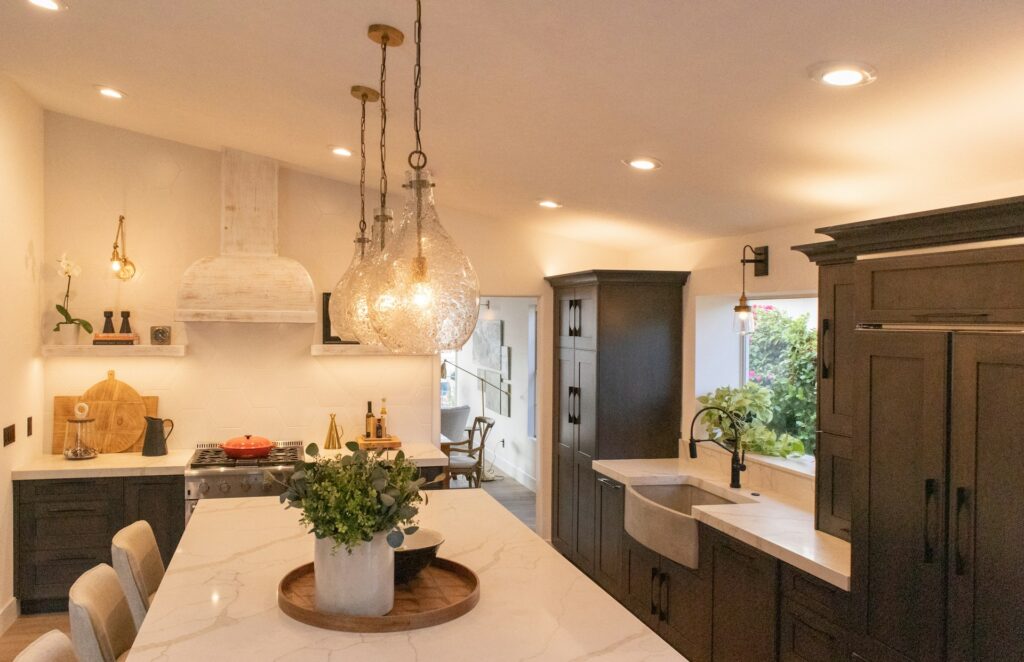
What it is:
Ambient lighting is the general illumination that fills the entire kitchen. Think overhead ceiling lights or recessed lighting.
Why it matters:
Ambient lighting sets the tone for the room. Without it, the kitchen feels dim, cramped, or unwelcoming—even if you have the best countertops and appliances.
Tips for getting it right:
- Choose soft, warm white bulbs to create a welcoming atmosphere.
- Avoid harsh overhead lighting that casts shadows on counters.
- Use dimmers to adjust light levels for cooking, cleaning, or family time.
Layering ambient light prevents your kitchen from feeling like a hospital or industrial space.
2. Task Lighting – Make Cooking a Breeze
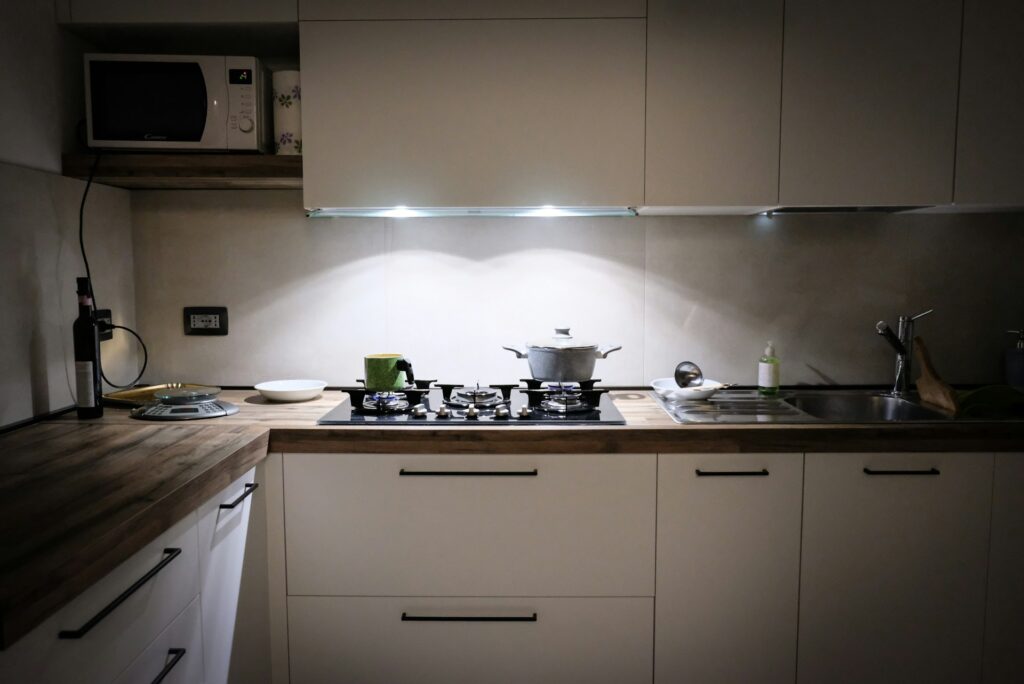
What it is:
Task lighting is focused illumination for work areas where precision matters: countertops, sinks, cutting boards, and the stove.
Why it matters:
Poor task lighting leads to mistakes, frustration, and even accidents. Shadows can hide spills, dull colors, and make prep work unnecessarily tiring.
Best approaches:
- Under-cabinet LED strips shine directly on your workspace.
- Pendant lights over islands combine style and practicality.
- Bright, cool white light enhances visibility without glare.
Task lighting isn’t just functional—it adds depth and visual interest to your kitchen design.
3. Accent Lighting – Highlight & Personalize Your Space
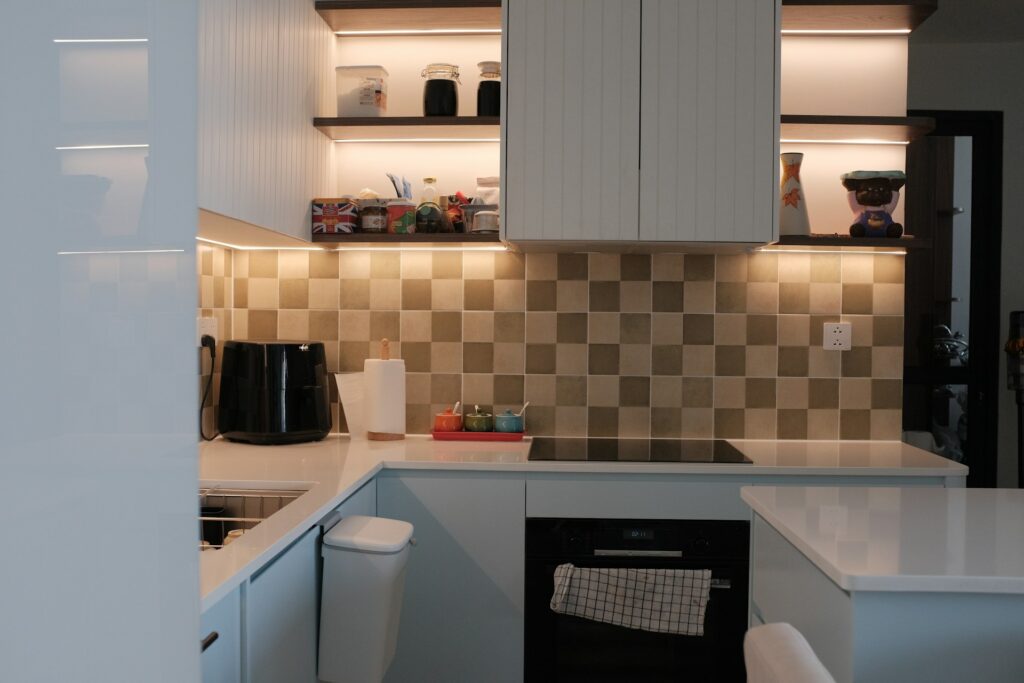
What it is:
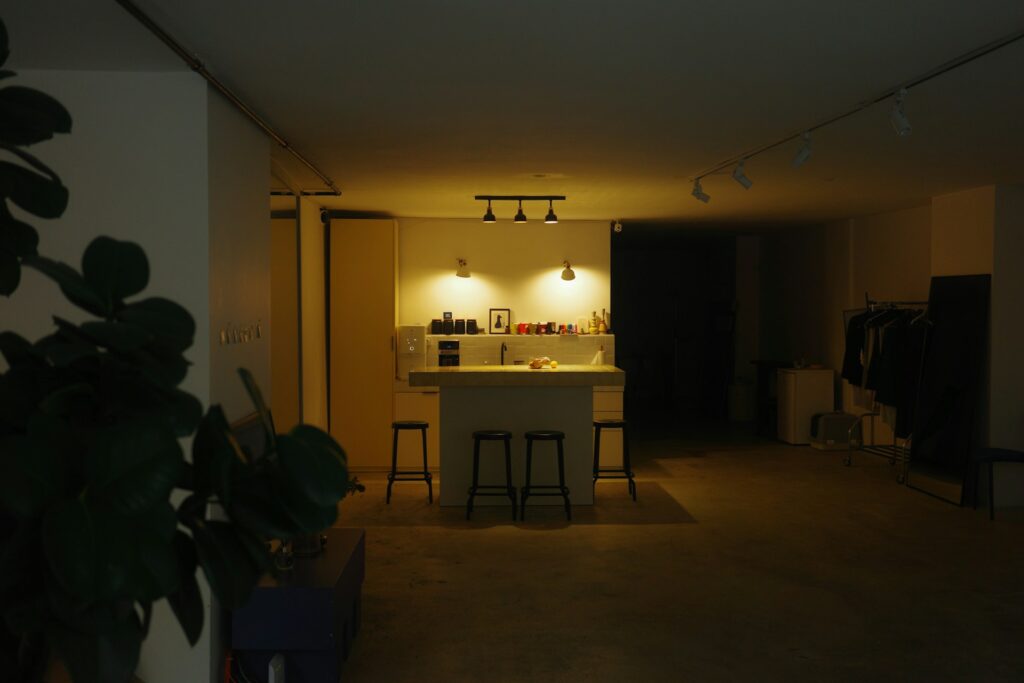
Accent lighting is the mood-setter. It highlights features, textures, or décor, and creates warmth and personality in your kitchen.
Why it matters:
Even with perfect ambient and task lighting, a kitchen can feel sterile without accent light. Accent lighting makes the space inviting and highlights your style.
Ideas for accent lighting:
- LED strips inside glass cabinets to showcase dishes or glassware.
- Spotlights over artwork, plants, or open shelving.
- Toe-kick lighting along the base of cabinets for soft nighttime glow.
Accent lighting turns your kitchen from purely functional to a space that feels alive and welcoming.
The Power of Layered Lighting
The secret to a kitchen that’s both practical and beautiful is layering all three types:
- Ambient – fills the space with overall light.
- Task – ensures precision and safety where you work.
- Accent – adds warmth, personality, and depth.
Without all three, your kitchen may feel unbalanced: too dark, too harsh, or emotionally flat.
Why It Matters Emotionally
Lighting affects more than visibility—it shapes your mood, energy, and the way you experience your kitchen.
- Poor lighting = cooking feels like a chore.
- Balanced lighting = kitchen feels warm, welcoming, and inspiring.
When you get the lighting right, your kitchen stops being just a functional space—it becomes the heart of your home.
Key Takeaway:
If your kitchen feels uninviting, overwhelming, or stressful, don’t start by changing furniture or appliances. Start by reconsidering how you light the space. Proper layering of ambient, task, and accent lighting transforms not just the room, but the way you feel in it.