
Your bedroom should do three things:
- Help you sleep better
- Make you feel calm the moment you walk in
- Reflect a clear identity (not random trends)
If it fails at any of these, decoration won’t save it—you need to rebuild the foundation.
1. Start With the Bed Size (Most People Get This Wrong)
Everything in your bedroom revolves around your bed. If the size is off, the entire room feels off.
Here’s the rule:
- Small room → Queen or smaller
- Medium room → Queen or King
- Large room → King with space around it
Mistake: Forcing a king bed into a small room
→ Result: cramped, stressful, no airflow
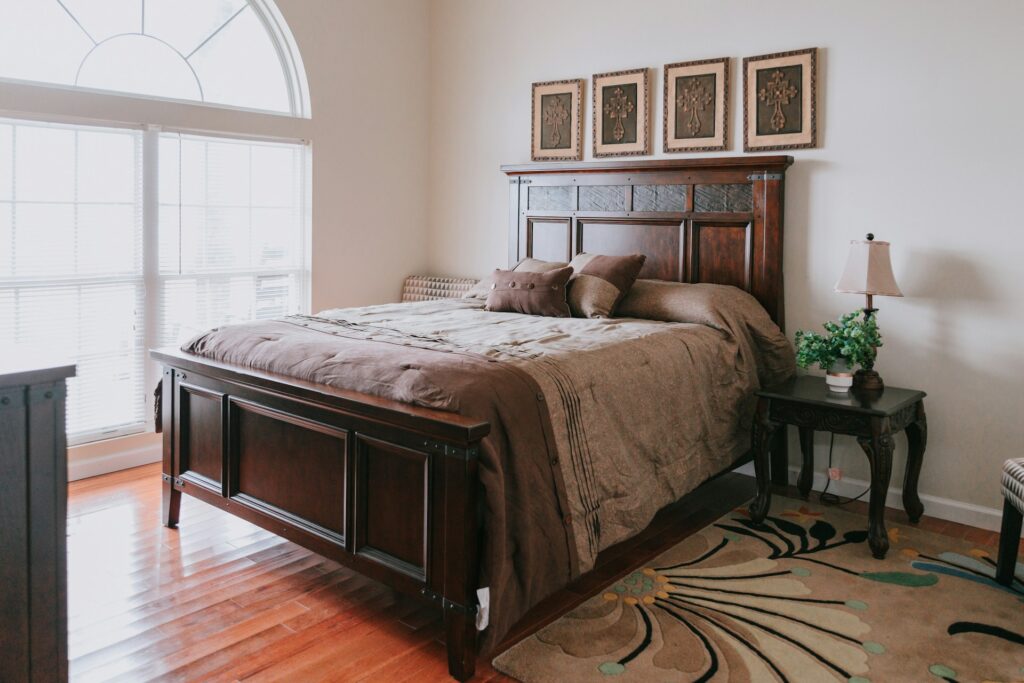
Better approach:
Leave at least 2–2.5 feet of walking space around the bed.
If you can’t do that, your bed is too big. Period.
2. Fix Your Layout Before You Add Anything
Stop buying decor before solving layout.
Non-negotiables:
- Bed should be visible from the door
- Avoid placing the bed directly in line with the door
- Keep both sides accessible (even in small rooms if possible)
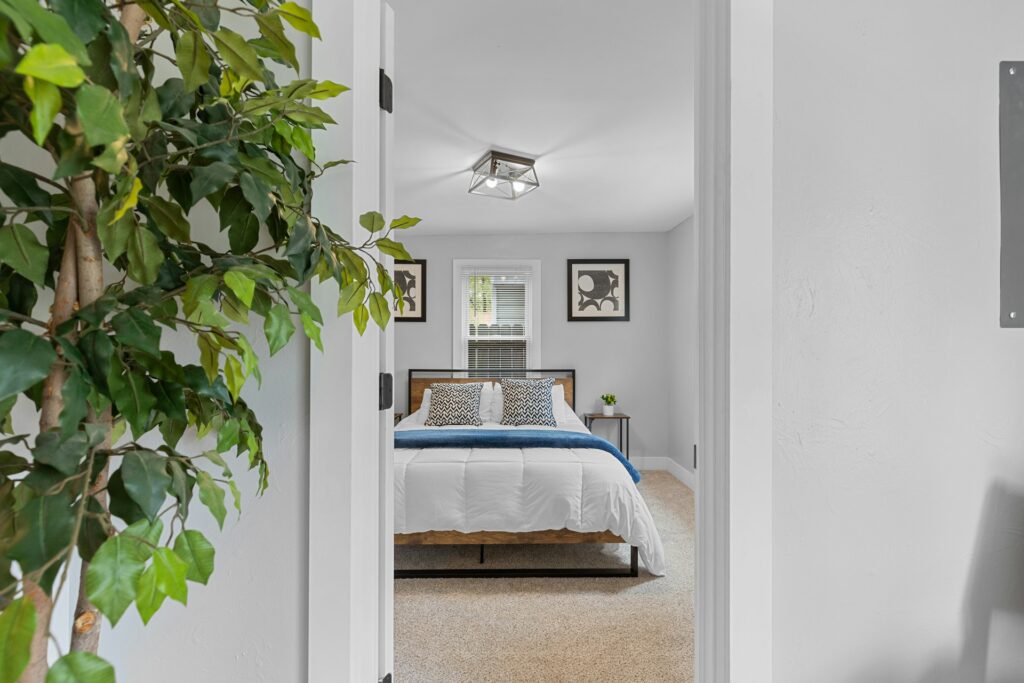
Why this matters:
Your brain scans the room instantly. Bad layout = subconscious stress.
3. Wall Decoration: Don’t Randomly Fill Space
Empty walls don’t mean something is missing.
Bad wall decor is worse than no decor.
Strong wall strategies:
Statement Wall (Best Option)
- One large artwork above the bed
- Or a panel, wood texture, or subtle wallpaper
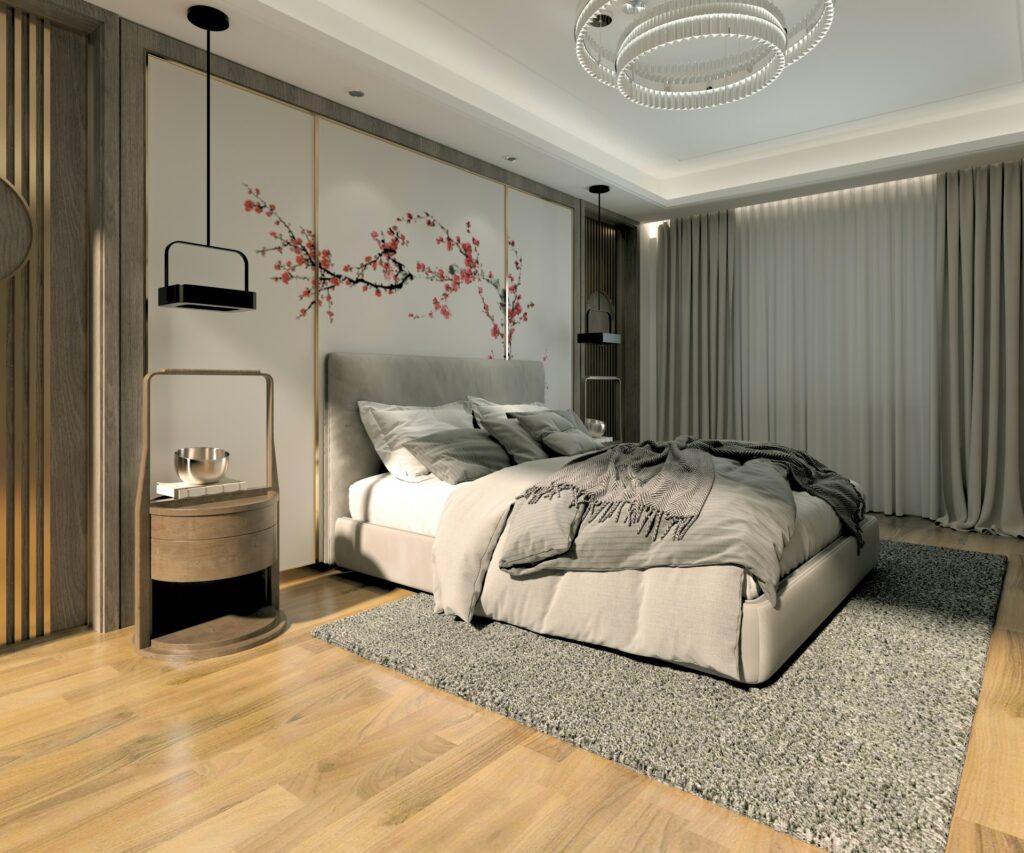
Symmetry Setup
- Two frames or two lights on each side
- Creates balance instantly
Minimalist Approach
- Leave it clean, focus on texture (paint, paneling)
Avoid:
- Tiny frames scattered randomly
- Overcrowded gallery walls in small bedrooms
4. Lighting Is More Important Than Decor
If your lighting is bad, your room will always look bad.
You need 3 layers:
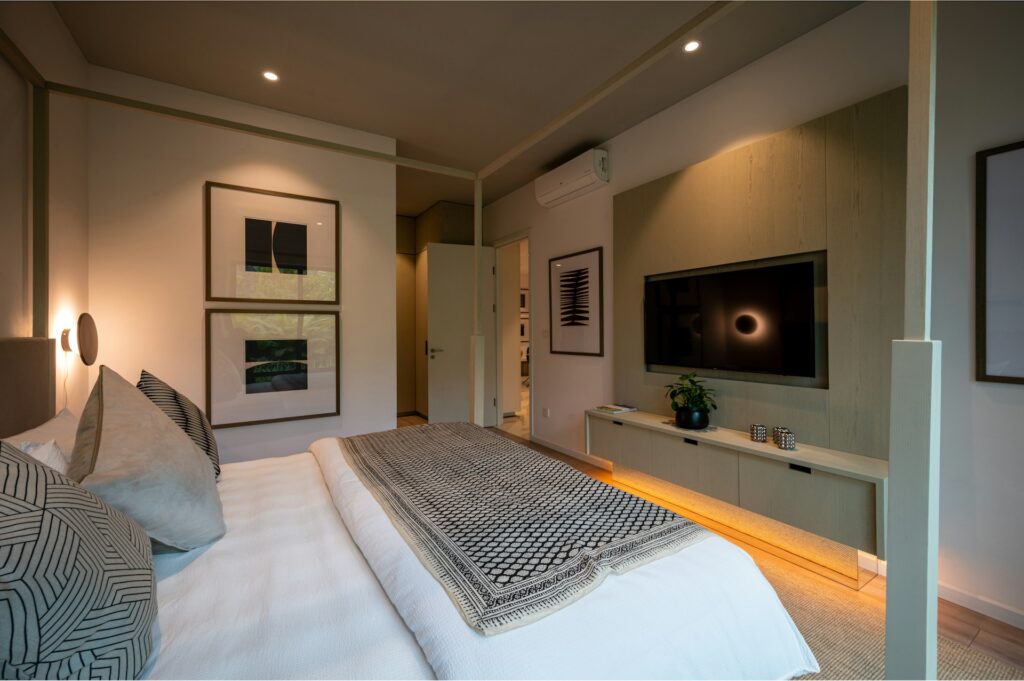
1. Ambient (Main light)
Soft, not harsh white
2. Task (Bedside lamps)
For reading, night use
3. Accent (Mood lighting)
Warm LEDs, hidden strips, or soft lamps
Brutal truth:
That single ceiling bulb? It’s ruining your entire bedroom.
5. Choose Colors That Calm — Not Impress
This is a bedroom, not a showroom.
Safe high-performing palette:
- Beige
- Warm white
- Soft gray
- Muted greens
- Earthy browns
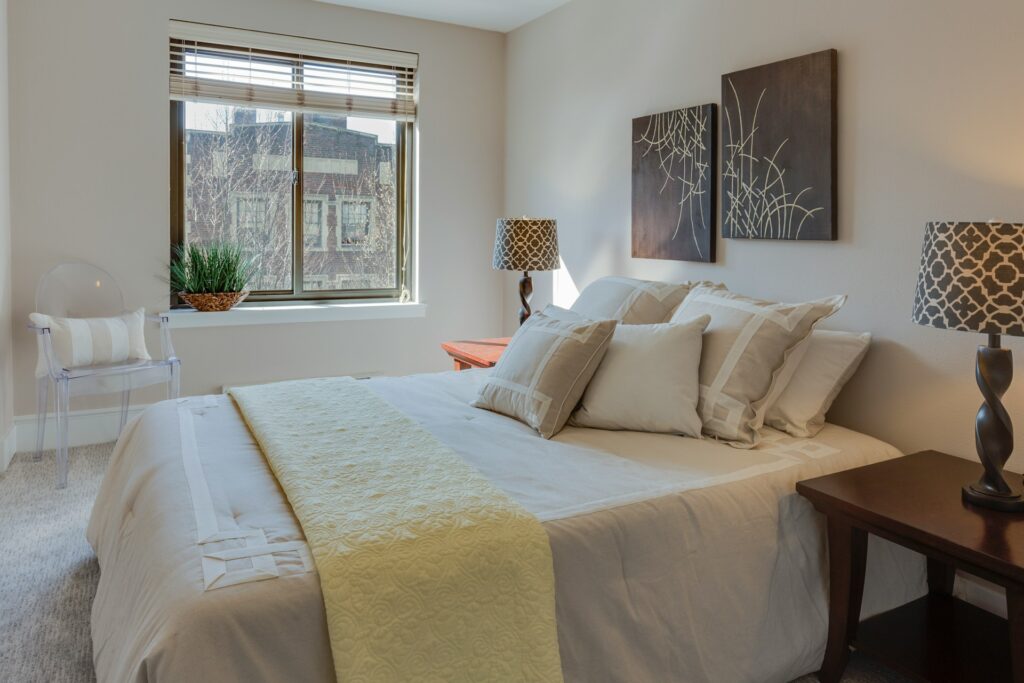
What to avoid:
- Extremely bright colors
- High contrast walls
- Too many color combinations
Goal: Your eyes should relax, not stay alert.
6. Furniture: Stop Overfilling the Room
More furniture ≠ better room
Keep only what earns its place:
- Bed
- Side tables
- Wardrobe
- Optional: chair or bench
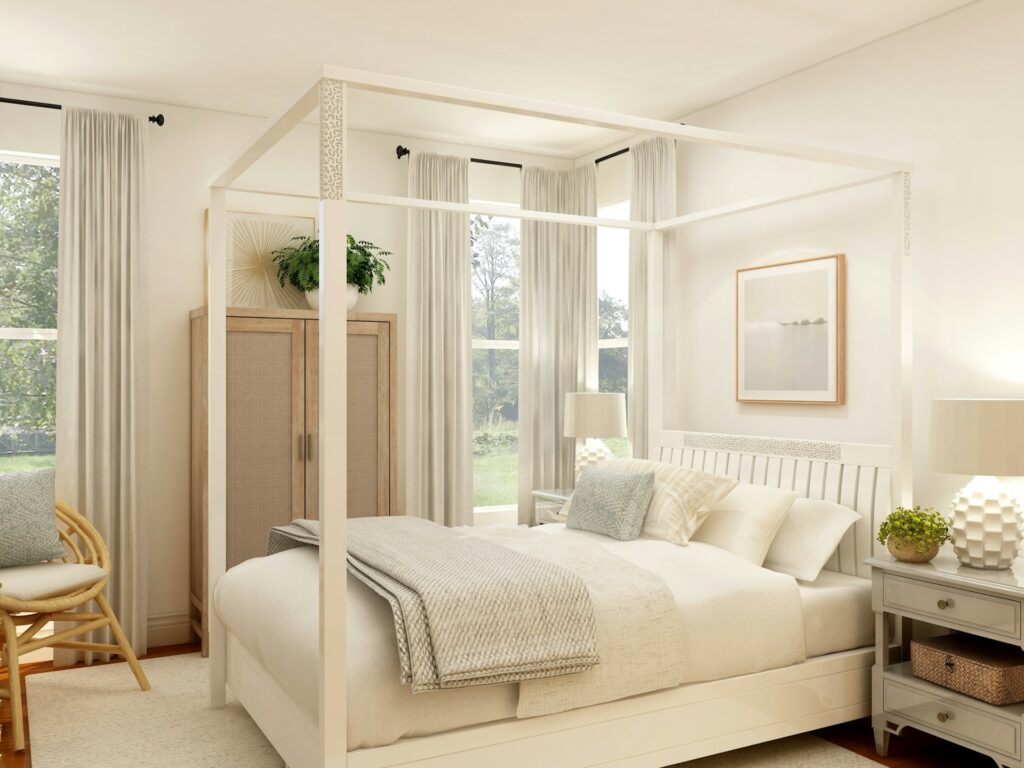
Common mistake:
Adding unnecessary shelves, extra tables, decor units
→ Result: clutter, smaller feel, mental noise
7. Use Textures to Create Depth (This is the Secret)
If your room feels flat, it’s not a color issue—it’s a texture issue.
Layer these:
- Soft bedding (cotton, linen)
- Curtains with weight
- Rug under or beside bed
- Wood, fabric, or matte finishes
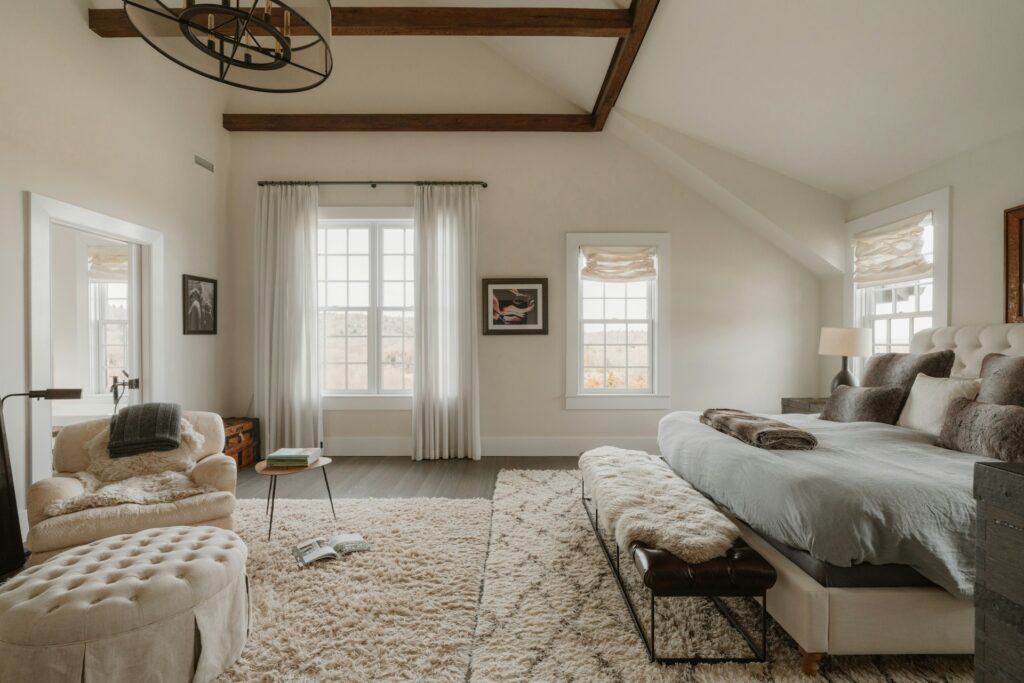
Texture = luxury without spending much.
8. Add Life — But Don’t Overdo It
A completely dead room feels lifeless.
Add:
- 1–2 indoor plants
- A book stack
- A personal object (not random decor)
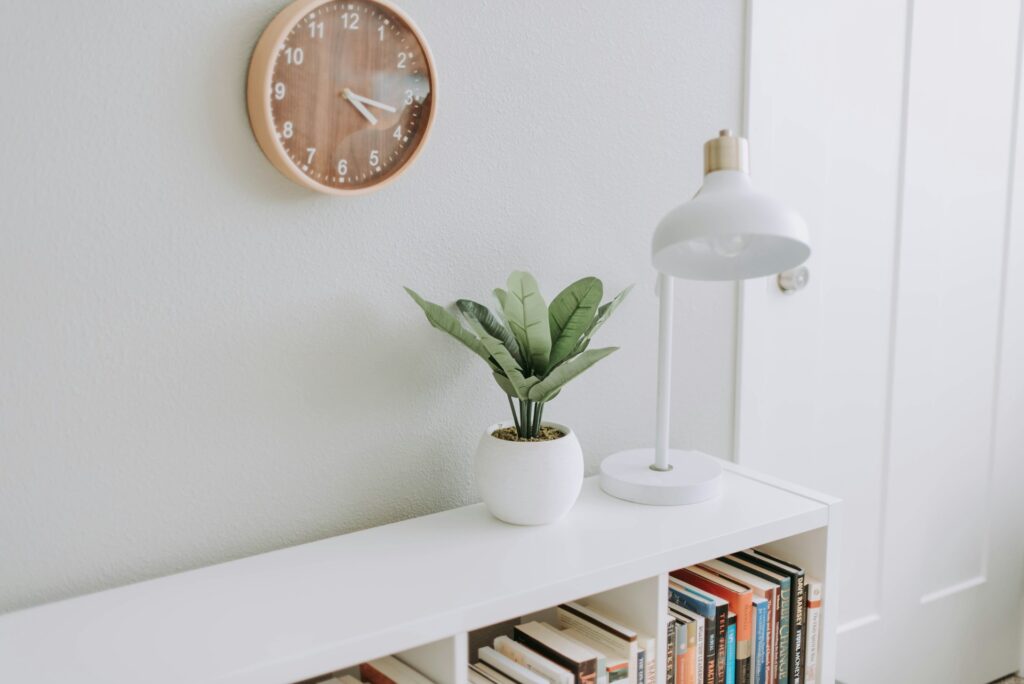
Avoid:
Turning your bedroom into a storage + decoration mix
9. Keep It Clean or Everything Fails
You can design the perfect room…
…but if it’s messy, none of it matters.
Non-negotiable habits:
- Clear surfaces
- Organized cables
- No clothing piles

Cleanliness is part of decoration—not optional.
10. Create a “Feeling,” Not Just a Look
Ask yourself:
Do I want this room to feel:
- Calm?
- Cozy?
- Luxurious?
- Minimal?
Pick ONE direction.
Example:
Cozy → warm lights, soft fabrics, wood tones
Luxury → symmetry, fewer items, premium finishes
Minimal → empty space, clean lines, neutral colors
Mixing all styles = confusion.
Final Thoughts: Stop Decorating — Start Designing
Here’s the uncomfortable truth:
Most bedrooms fail because people:
- Copy random ideas
- Ignore proportions
- Chase trends instead of function
If you fix:
- Bed size
- Layout
- Lighting
- Color
…you’ve already beaten 90% of homes. Decoration is just the final 10%.